From Samuel Lewis' A Topographical Dictionary of England, 1831.
From the Guernsey Press of May 11th, 1939; 'Heard in the Bordage' by Stargazer.
Extracts from the bound collection of transcribed MSS known as the Nicolas Dobrėe MSS. All in beautiful copperplate, they include versions of charters and other Royal Orders and Acts, and various letters patent and so on that were obviously regarded as highly significant by the volume's owner. Followed by a transcription made in 1730 of the Constitutions of King John, from 'an old translation into French from the original in Latin ... copied from the Book of Mr H Mauger, Comptrolleur,' part of a collection of legal documents probably belonging to former Bailiff Peter de Havilland.
From The Ladies' Companion and Monthly Magazine, 1868. Old-fashioned and full of Latin tags but more fun that you might think. 'For be it remarked here, that the Alderney girls age remarkably fast, and very probably the charmer who is carrying on a conversation with you, and parrying all your flirting and causerie, with all the nerve and steadiness of five-and-twenty, is, after all, only adorned by the petitionary grace of sweet seventeen.'
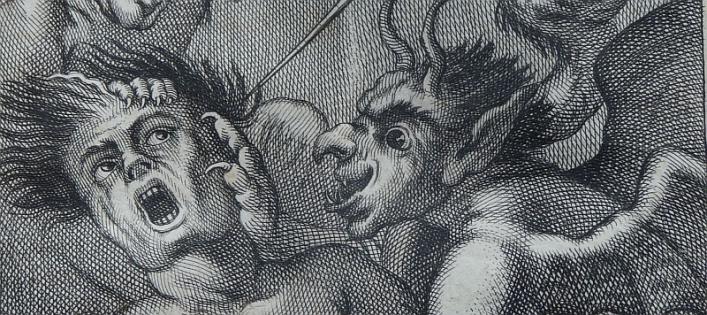
Elie Brevint (1587-1674) was minister of Sark from 1612. His father Cosmé, also a minister, was a Huguenot refugee from Angoulême who had accompanied Helier De Carteret from Jersey in his colonisation of Sark. Transcriptions and microfilm of Elie's 14 Notebooks, which were found in a loft in Sark in the 19th century, are held in the Priaulx Library. Elie appears to be a sensible and rational man with a curious and detached mind, until he turns to these sorts of subject: the Pousseresse, perturbateurs, and salamanders. The illustration is of the Tormento do Tacto, or Torture, from Alexander Périer's O Desengano dos Pecadores of 1724, in the Library.
From the Gazette de Guernesey, 4th August 1821
A letter to the Editor of the Star newspaper from the Guernsey historian Edith Carey, 14 December 1926, concerning the history of the French Prayer Book, published for the islands, the first (unpopular) edition of which exists in only one copy, in the Lambeth Palace Library.
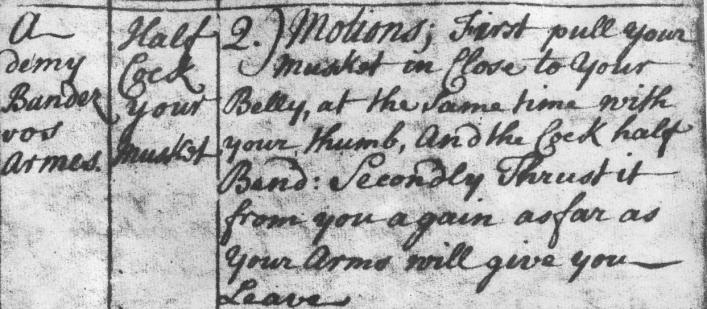
The Library has in its extensive local militia collection a photocopy of what was no doubt a most invaluable document in its time: a suggested drill, and loading instructions for the flintlock musket, written in the early 18th century for the officers of the Guernsey militia by Phillips Loggers.
A layman's guide to the workings of the Royal Court, from Mauger's Guernsey Almanac, 1823, including the Courts of Chief Pleas, Mobiliary, and Plaids d'Heritage.
Chamber’s Journal, 1838. 'Both Alderney and Serk enjoy an excellent climate, and on that account a few residents, chiefly retired officers, have fixed their abode in these islands. But the luxuries of life are too scarce to render the small Channel isles ever the chosen abode of the wealthy.' 'It may seem strange to say of any portion of the British dominions, that reading is unknown: such, however, is the case in Alderney.'
A digitized copy of Ferdinand Brock Tupper's collection of biographies of eminent Guernseymen, arranged chronologically, beginning with John Andros in 1554, and ending with the death of Bernard Ouseley Brownrigg in 1864.
From The Zoologist, May 15th 1906, in the Library.