An extract of a letter from M. L. B. of the Brig J-, to a friend in this Island, dated Newfoundland, August 1826. Published in L'Indépendance, Saturday, 21 October, 1826.
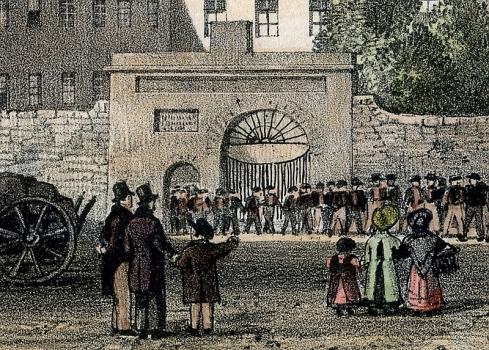
The impecunious Thomas Le Marchant of La Plaiderie died in 1762, leaving a family of young children. His estate at L'Hyvreuse, which included what is now Beau Séjour, was bought by William Dobrée , his children's guardian. Part was then sold to the States of Guernsey; L'Hyvreuse house was demolished and the land used for recreation and as a parade ground for the militia. The imposing double gateway, 'similar to that called Ivy Gates, but much handsomer,' to L'Hyvreuse house was all that remained; it then served as an entrance to the New Ground, or what we now know as Cambridge Park, but…
An extract from an article published in the Star of October 18, 1825. 'The observations that follow have been copied from The Morning Herald. They will tend to show what views some strangers are apt to form of our local peculiarities; if, indeed, they can be taken as the real views of the writer, which, from the incorrectness of his statements, and the exaggerated description he has given of advantages and disadvantages, beauties and defects, we more than doubt.' The young lady in the portrait is Anne Priaulx.1
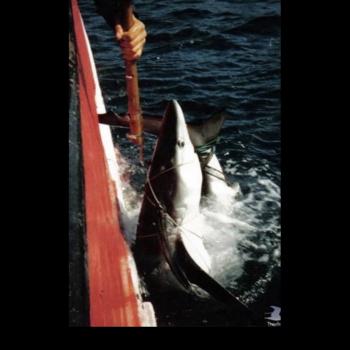
The Star, Monday, October 18, 1847. The image is of a large blue shark being landed aboard the Guernsey fishing vessel, Josephine Marie, c. 1990, courtesy of Daniel Robins.
War Pictorial News, which ran from 1940-46, was produced by the Ministry of Information in Cairo, for distribution to allied troops in the Middle East and the Mediterranean.
James Saumarez' account of the loss of the 28-gun frigate Boreas, wrecked on the Hanois rocks on November 28th, 1807. This disaster was one of the major factors in the eventual decision to erect a lighthouse there. The number of men who died is uncertain; 77 were saved. Captain Robert Scott's wife is also said to have been drowned. From Cobbett's Political Register, Vol. 12, 1807, p. 928.
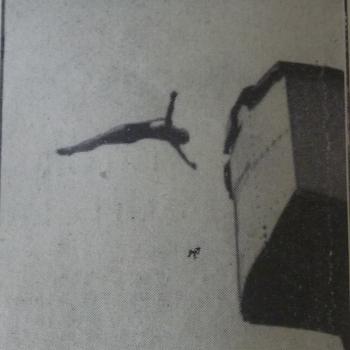
Here's what the Guernsey Water Polo Association got up to in what they termed their 'crazy' Water Gymkhana of August 1938, from the Star.
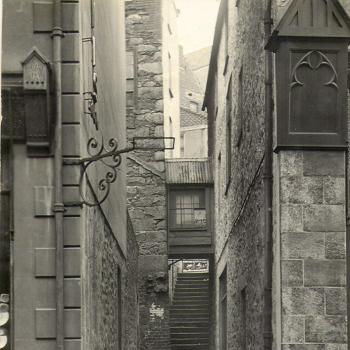
Mr Havilland's house is consumed by fire: two accounts, one from Jean de la Marche's diary, the other from George Fashion's notebook. The photograph is of the Ruette Marie Gibaut (colloquially Fuzzey's Lane), in St Peter Port, in 1936, from the Library Collection.
A letter from Peter Paul Dobrée, (1782-1825), who was born in Guernsey and became Regius Professor of Greek at Cambridge University in 1823. In 1811 he had visited 'Don Pedro' (Peter Carey) Tupper, the Guernsey-born and immensely wealthy British consul in Valencia. The illustration of Cadiz is from Sir John Carr's Descriptive travels in the southern and eastern parts of Spain and the Balearic isles, in the year 1809, London: 1811, in the Library collection.
From the Star, June 8, 1837
Lots of trouble over French brandy. The illustration is a detail from one of the earliest photographs in the Library's collection, dating from 1845, showing Cadic's 'inn near the South Pier,' not far away at all from Cow Lane, the scene of the crime. Next door to his establishment was the inn, the 'Three Tuns,' proprietor Mrs Simon.
JOHN and JOSEPH ORCHARD having constructed a DIVING DRESS for the purpose of searching the Bottom of the sea in a moderate depth of water, beg leave to inform the public that they will, on TUESDAY MORNING at 10 o'clock, go down at the pier head and walk underwater towards Castle Cornet. This being the first thing of the kind ever made in this island, they invite the attention of the public to the above trial.