'I have cured persons whom the Doctors had given up; if I am guilty it is of that.' The King versus D'Orléan, the conclusion of a protracted case which opened in the Royal Court, Saturday, December 10th, 1836. Much of the evidence was heard in camera. D'Orléan was practising as a veterinary surgeon. The folk of the country parishes—Judith Lainé, the Bichards, Rihoys, Reniers, Mahys, Galliennes and Ogiers, in this case—are as usual regarded as ill-educated and credulous by Guernsey's sophisticated urbanites. The details of the case are reported in the Comet of February 6, 1837.
'A most audacious fellow.' From the Comet, July 14th 1836.
A surprising dark side to life at the Town Hospital is hinted at in this Royal Court case. Unmarried local girls who became pregnant and who sought help at the Hospital, although treated kindly, were nevertheless put under a great deal of pressure to disclose the name of the father, so that he would be responsible for the child's maintenance and not the parish, but the threat extended to this girl is another thing entirely and seems to have terrified her. It should be noted that the Star newspaper chose not to mention the dress and represented the trial somewhat differently.
The names of the Alderney people have been extracted and normalised.
From the Town Church Registers. Victims of the slave trade. The Rivoire family, and a letter from John Rivoire of Guernsey to his cousin, Paul Revere. He was a Captain of a militia company in Guernsey: his brother Captain William Rivoire was lost at sea.
The details of De Havilland's court martial, resignation, and restoration in India. 'Lord Minto, in his general orders from Madras, respecting the late defection or quarrel, published a list of twenty-two officers who were to be tried by court martial, or optionally to resign the service; my name was among these, and therefore I now avail myself of this opportunity to explain the grounds upon which I was implicated; in the hope that such explanation, faithfully given, may reach my descendants.'
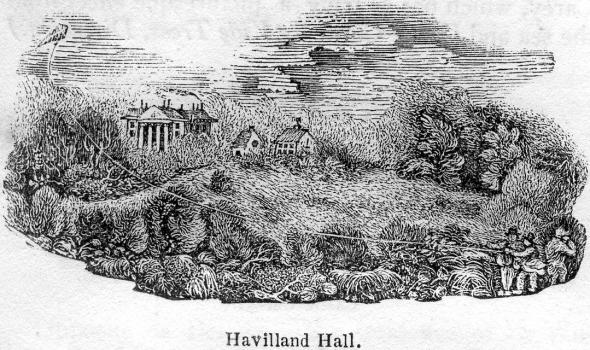
Builder of the now lost 'De Havilland's Bulwark', St George's Cathedral, St Andrew's Kirk and many other buildings at Madras, now Chennai, and here in Guernsey, Havilland Hall. From his book, The De Havillands of Guernsey, published in 1854. He died in 1866. The woodcut is by Dr Thomas Bellamy from his Pictorial Directory of 1843, in the Library collection.
From the Star, May 11, 1837.
From W T Money's diary of his visit to Guernsey in 1798, edited by Edith Carey, and reproduced in the Report and Transactions of the Societe Guernesiaise (1931). Not much has changed, not even the views from the Library that Money so much appreciated.
From The Star, September 14, 1916: Lance-Corporal H J Bisson, son of Mr H F Bisson, monumental mason, St Julian's Avenue, writes home to his wife, who lives at L'Islet, that he has been awarded the Distinguished Conduct Medal.
At the meeting of the Loyal Guernsey Lodge of Oddfellows, held at Lower St Julian's last evening, the officers wore mourning regalia as a tribute of respect to the late Mr J H Ingrouille, who was one of the founders of this great Friendly Society. The following may be read with interest by local Oddfellows: Mr John Ingrouille was the survivor of half-a-dozen Guernseymen on whom rested the honour of starting the great Friendly Society movement in this island. In the upper room of the café in the States Arcade, then a hotel kept by Bro. Rougier, was formed by the six, the Loyal Guernsey Lodge…
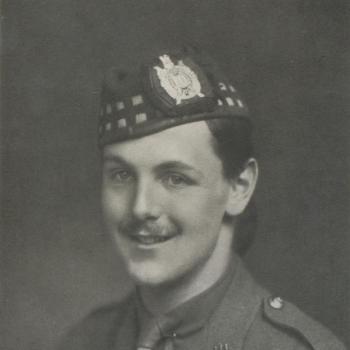
From the Star. The Library has in its collection a biography of Captain Herries, A young Borderer: a memoir of Alexander Dobrée Young-Herries, Captain, The King's Own Scottish Borderers, by David Frew, published in 1928.